 Dr Piss Off
Your prayers didn’t change. Your receipts did.
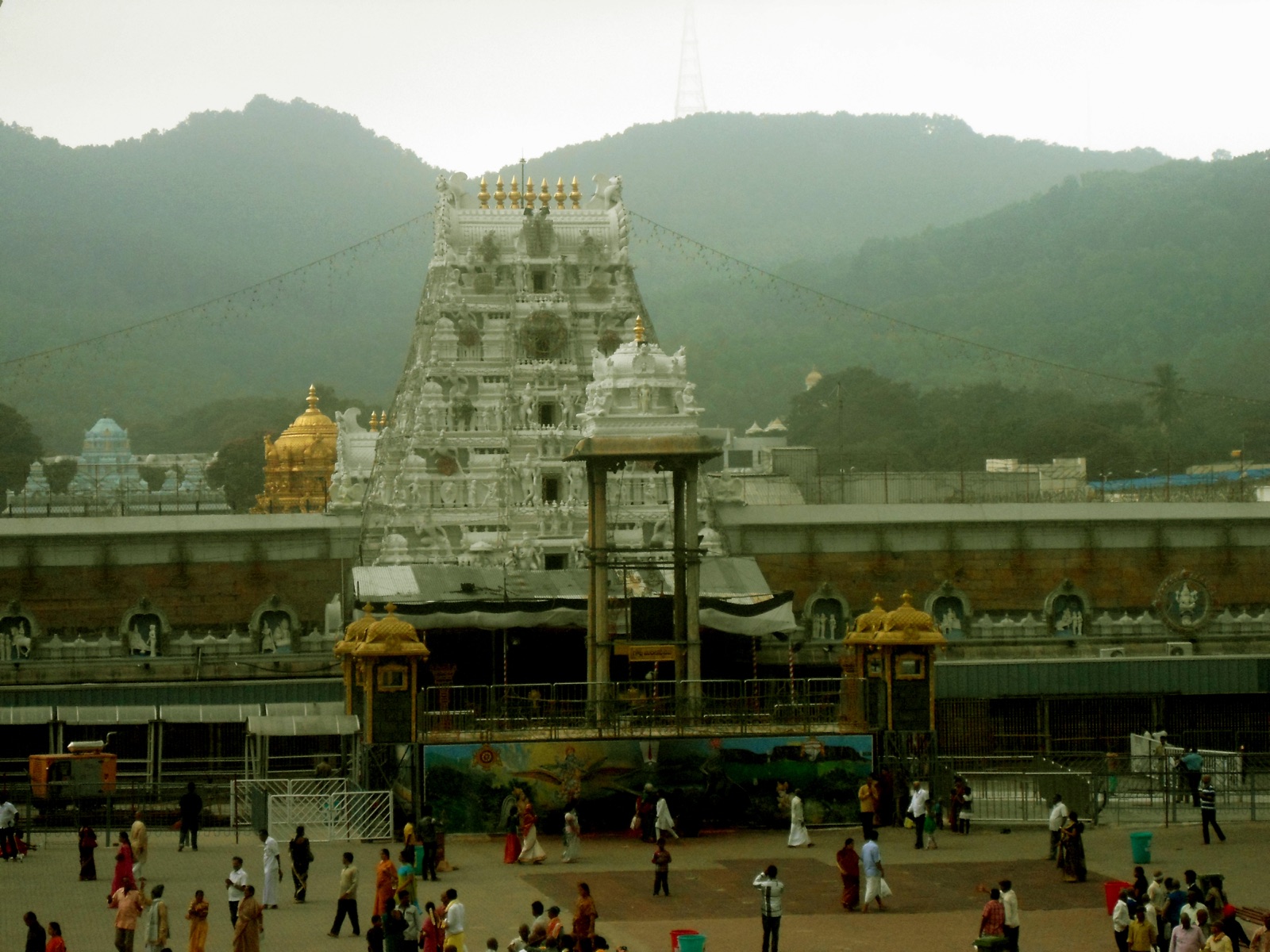
There is a counter at Tirupati where you can pay to skip the line to see God.
Sit with that. Not a metaphor, not an exaggeration — an actual, official, priced service. The poor stand for twelve hours. You pay, and you don’t. Same deity. Same blessing, presumably. Different queue.
Nobody riots about this. It’s normal. It’s on the website.
And that, more than any statistic I’m about to throw at you, is the story.
India got rich. The temples got richer.
Here’s what was supposed to happen to India.
Every theory of modernisation, from Weber onwards, predicted the same arc: countries get richer, people get educated, cities grow, and religion quietly loosens its grip. It happened in Britain. It happened across Western Europe. It happened, more slowly and messily, in America. Wealth buys you security, security kills the terror that religion was answering, and the temples empty out.
India got the wealth. The temples did not empty out.
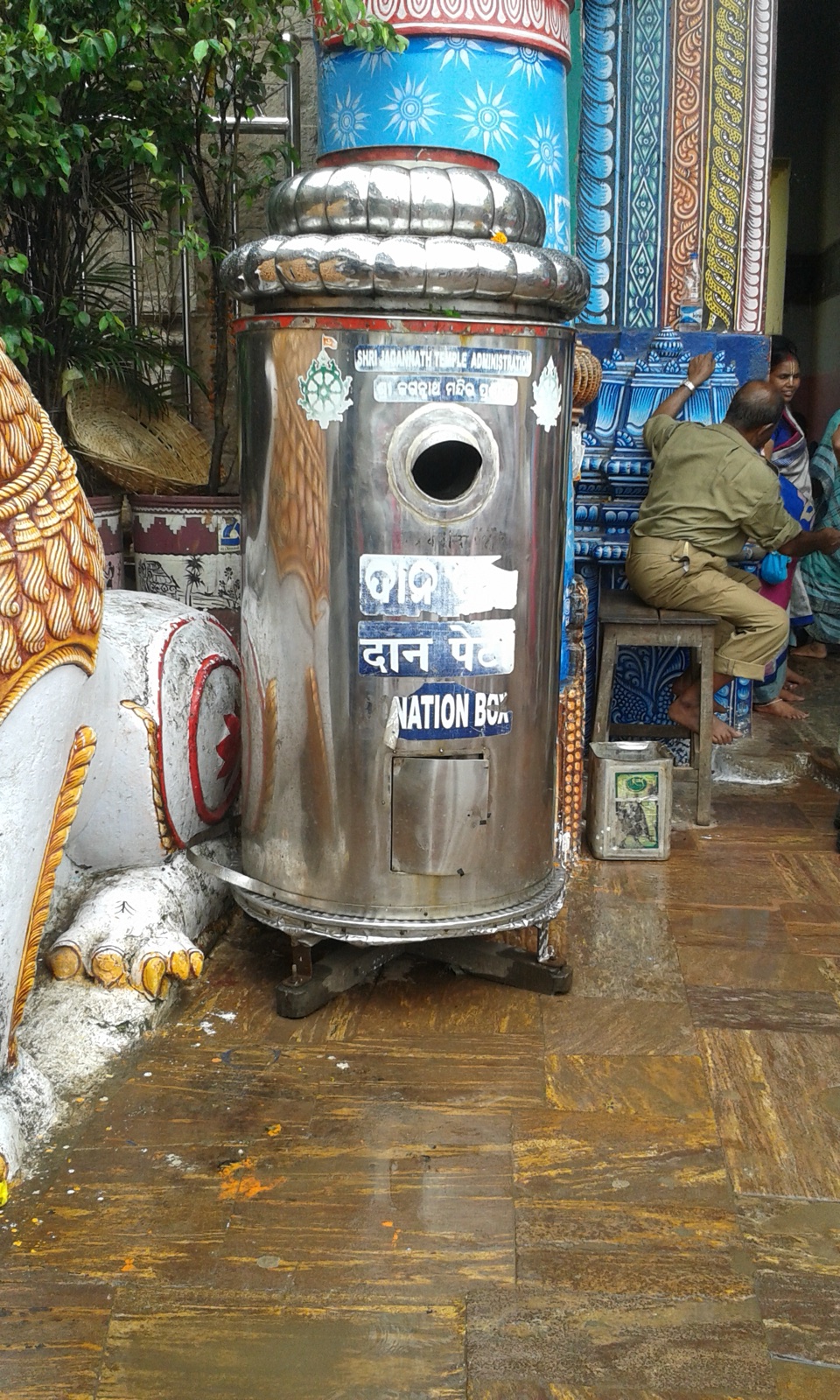 “Donation Box, jagannath temple” by Abha S Pradhan, released into the public domain by the author.
The numbers behind the boom
Tirumala Tirupati Devasthanams took in over ₹918 crore in direct donations in a single year. Digital donations overtook the physical counters for the first time — people are now tapping their phones to give to God. The temple trust’s assets run into the lakhs of crores. India’s religious and spiritual sector is a market that commercial analysts size in the tens of billions of dollars and project to double within a decade.
Meanwhile a single family wedding in 2024 carried cost estimates running from a few hundred million dollars into the billions, depending on which outlet you believed — most of that spend wrapped around ritual.
So: booming economy, booming religion. Weber was wrong about India, right?
Not quite. Because here’s the part that breaks the story.
Rich Indians don’t pray more — they pay more
When Pew surveyed nearly 30,000 Indians, they found something odd: the rich and educated aren’t the ones driving India’s religiosity.
What the surveys actually found
Religion is enormously important here — 84% say it’s very important in their lives. But the rich and educated aren’t the ones driving it. College graduates say religion is very important at 80%; people with less education, 85%. Basically flat. And the wealthiest, best-educated region — the South — is the least religious in the country: 69% versus 92% in central India.
So on every measure we normally use for religiousness — do you pray daily, do you visit a temple, does faith matter to you — getting richer in India does almost nothing. Sometimes slightly less.
But the money says something completely different.
Why economists call it a luxury good
Household data shows religious spending rising steadily with income. Economists who lump “social and religious obligations” into a basket of conspicuous consumption find that basket behaves like a luxury good — spending on it rises faster than income does. That’s the technical signature of a Rolex, not a roti.
Want the receipts? The elasticity estimates, the sample sizes and the two caveats that cut against them are in Status-Redirected Religiosity.
Put the two findings side by side and the picture resolves.
Wealth in India doesn’t make you pray more. It makes you spend more on being seen praying.
Our surveys were built for church, so they missed it
Part of why nobody caught this earlier is embarrassingly simple: our instruments were built for the wrong religion.
The Bihar experiment: 90% versus 16%
A political scientist ran a neat experiment in Bihar. Ask Hindus a multiple-choice question about temple attendance, and over 90% tick the box. Ask them open-endedly what they actually do as religious practice, and only 16% mention going to the temple at all. What they volunteer instead is puja at home, festivals, the thread on the wrist, the sindoor, what’s eaten and what isn’t, what’s auspicious and what’s polluting.
Our surveys were designed around Sunday church — attendance, belief, weekly worship. Hinduism doesn’t run on belief and attendance. It runs on practice. And practice can be bought, elaborated, upgraded, and displayed in a way that private belief never can.
Which means a wealthy Indian can score identically to a farmer on every religiosity question ever written, while donating a hundred times more, flying to four pilgrimages a year, and retaining a personal priest. The survey sees two equally religious men. Reality sees something else entirely.
The money buys position, not salvation
Not salvation. Salvation was always free — that was the entire point.
What money buys is position.
Weber, who everyone quotes and almost nobody reads properly, drew a distinction that matters here. There’s class — what your money gets you in the market. And there’s status — the honour, the standing, the deference you command socially. He noticed that status communities are often hostile to raw money, precisely because they need something money can’t obviously buy.
Religion in India has become a machine for converting the first into the second. Cash in, honour out. The donation plaque with your family name. The seat at the front. The guru who takes your call. The wedding ritual so elaborate it takes four days and an event manager. None of this makes you closer to God. All of it makes you closer to the top.
And there’s a name for this from long before liberalisation. The sociologist M. N. Srinivas called it Sanskritisation — the pattern where a community that rises economically starts adopting stricter, more orthodox, more “pure” religious practice to convert that new wealth into social respectability. Give up meat. Give up alcohol. Take on the rituals of the castes above you.
Sanskritisation has been running for a century. The new money just gave it a bigger budget.
It is the oldest status machine India has, and liberalisation didn’t invent it. It refinanced it.
This spending looks like insurance, not serenity
Here’s the question I can’t get past.
Prosperity in the West loosened religion’s grip because it delivered something specific: security. When the state catches you, when medicine works, when your children reliably survive, the existential terror that faith was managing recedes, and the practice thins out.
India’s elite got the prosperity. They did not, apparently, get the security.
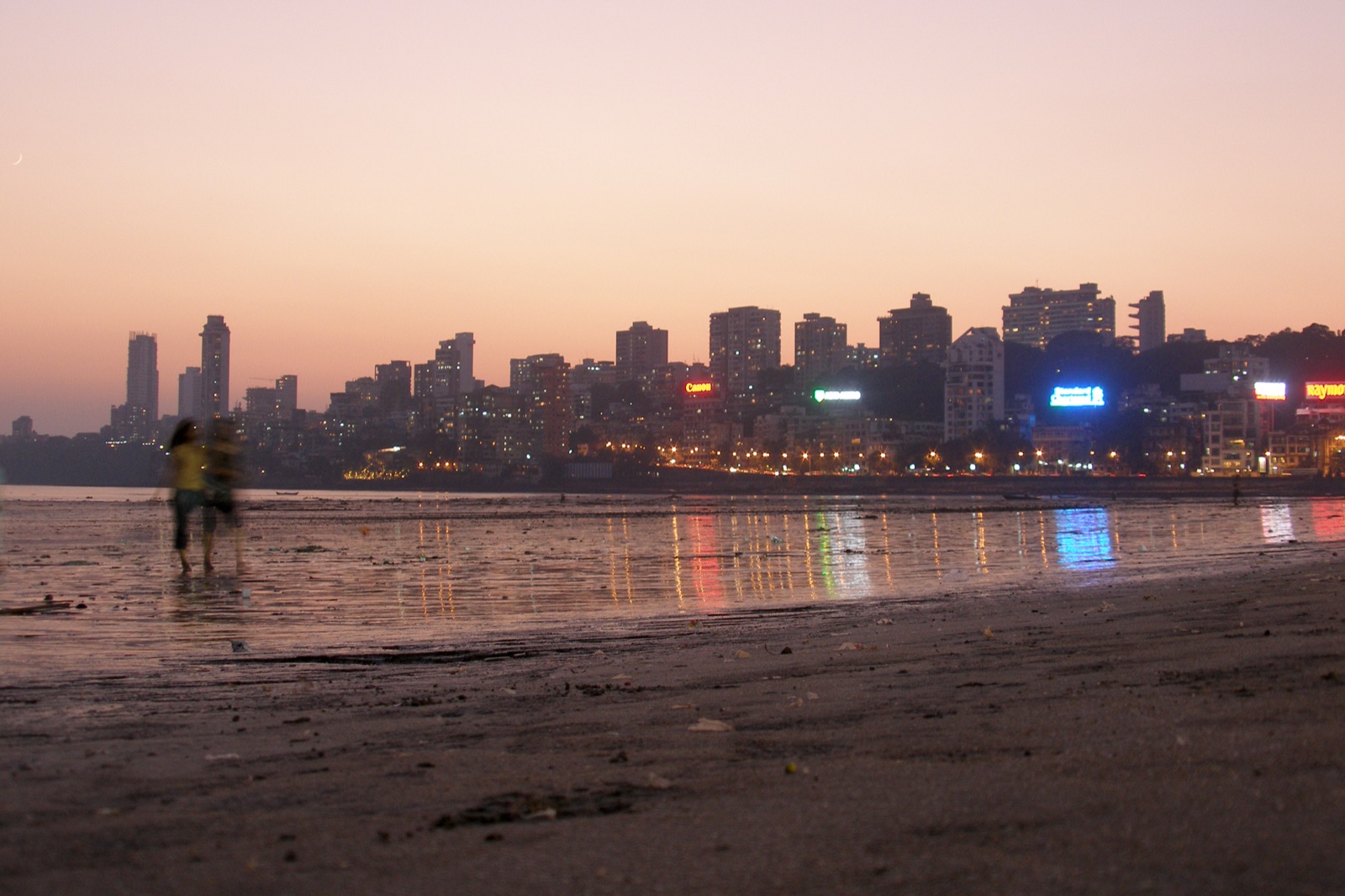
Because look at what the spending actually resembles. It doesn’t look like serenity. It looks like insurance. Escalating, competitive, publicly-visible insurance — against uncertainty, against status loss, against the suspicion that the money might vanish as quickly as it came. You don’t buy priority access to the divine if you feel safe.
That’s not a spiritual civilisation flourishing. That’s an anxious one, with better credit.
A priced queue turns a levelling institution into a stratifying one
I’m not interested in whether any individual believer is sincere. I have no way of knowing and neither does anyone else, and the people claiming otherwise are usually selling something themselves.
What I’m condemning is a system — one that has learned to sell status back to us and call it devotion.
Because here’s what a temple is supposed to be. It’s supposed to be the one building in India where the queue doesn’t care who your father is. Where the accountant and the auto driver stand in the same line for the same darshan, and the only currency is showing up. In a country that invented caste, that is not a small thing. That is arguably the most radical thing about the whole tradition.
And we sold it. For a convenience fee.
Every paid queue, every VIP entry, every donation tier that buys visibility, takes the one institution that flattened hierarchy and turns it into another instrument for enforcing it. We took the ladder out of the temple and then put a bigger one back in.
The society that holds itself back isn’t the one that prays. It’s the one that has quietly agreed that even God can be reached faster with money.
Want to check my work? The full theory — named, formalised, with the data, the competing explanations and the places I might be wrong — is written up in Status-Redirected Religiosity.
Image credits
- Hero: “A View of Tirumala Venkateswara Temple” by Adityamadhav83, licensed under CC BY-SA 3.0, via Wikimedia Commons. Resized from the original; this adaptation is shared under the same licence.
- Donation box: “Donation Box, jagannath temple” by Abha S Pradhan, released into the public domain by the author, via Wikimedia Commons. Resized from the original.
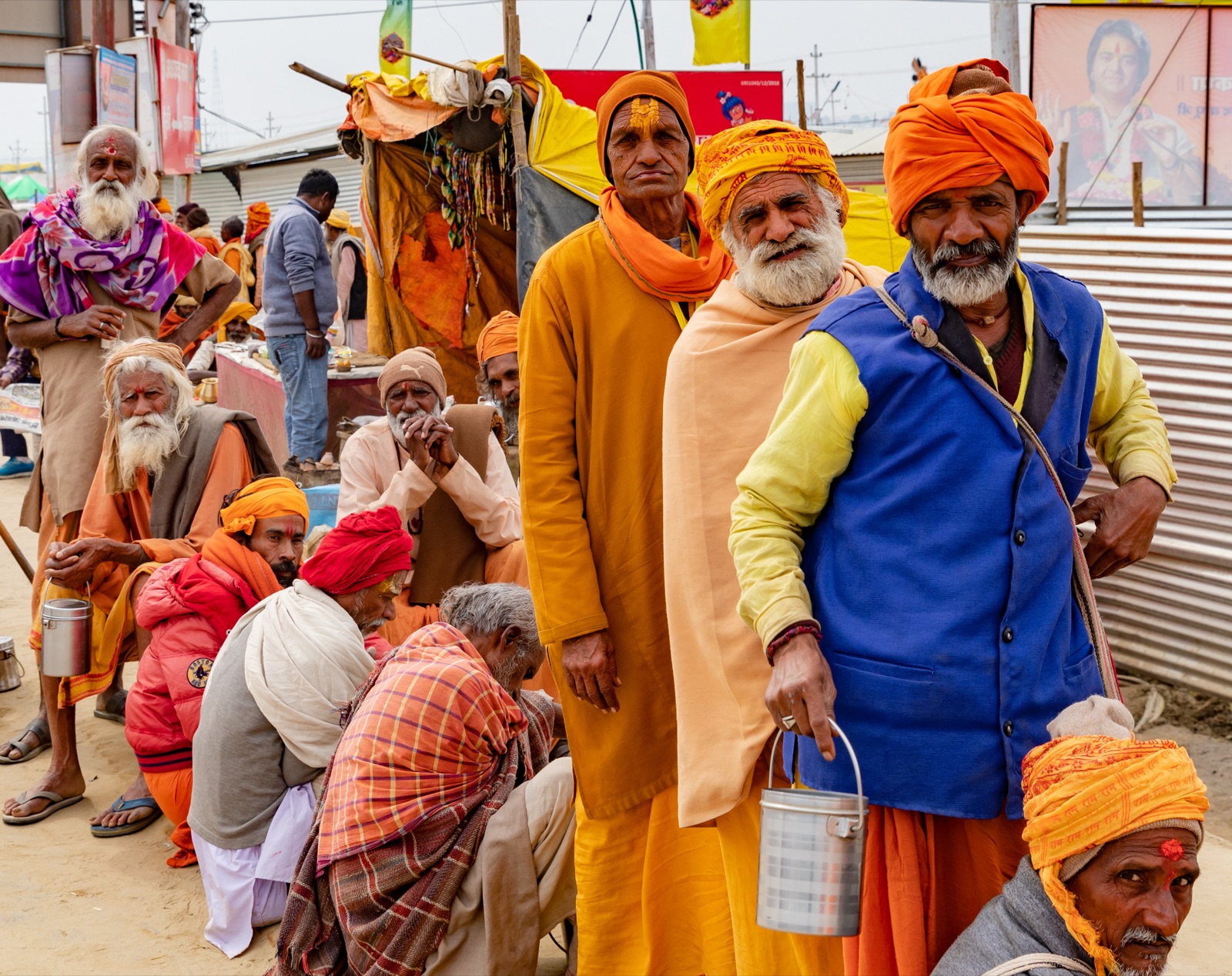
- Kumbh Mela: “Kumbh Mela 2019, January 15 - March 4” by Ninara, licensed under CC BY 2.0, via Wikimedia Commons. Resized from the original.
- Mumbai skyline: “Mumbai, India, Bombay, Mumbai city skyline at night” by Vyacheslav Argenberg (© Vyacheslav Argenberg), licensed under CC BY 4.0, via Wikimedia Commons. Resized from the original.